
Why Experiential Learning Matters
Children remember what they do far longer than what they hear. Here is why learning by doing works, and how it looks at Samartha.
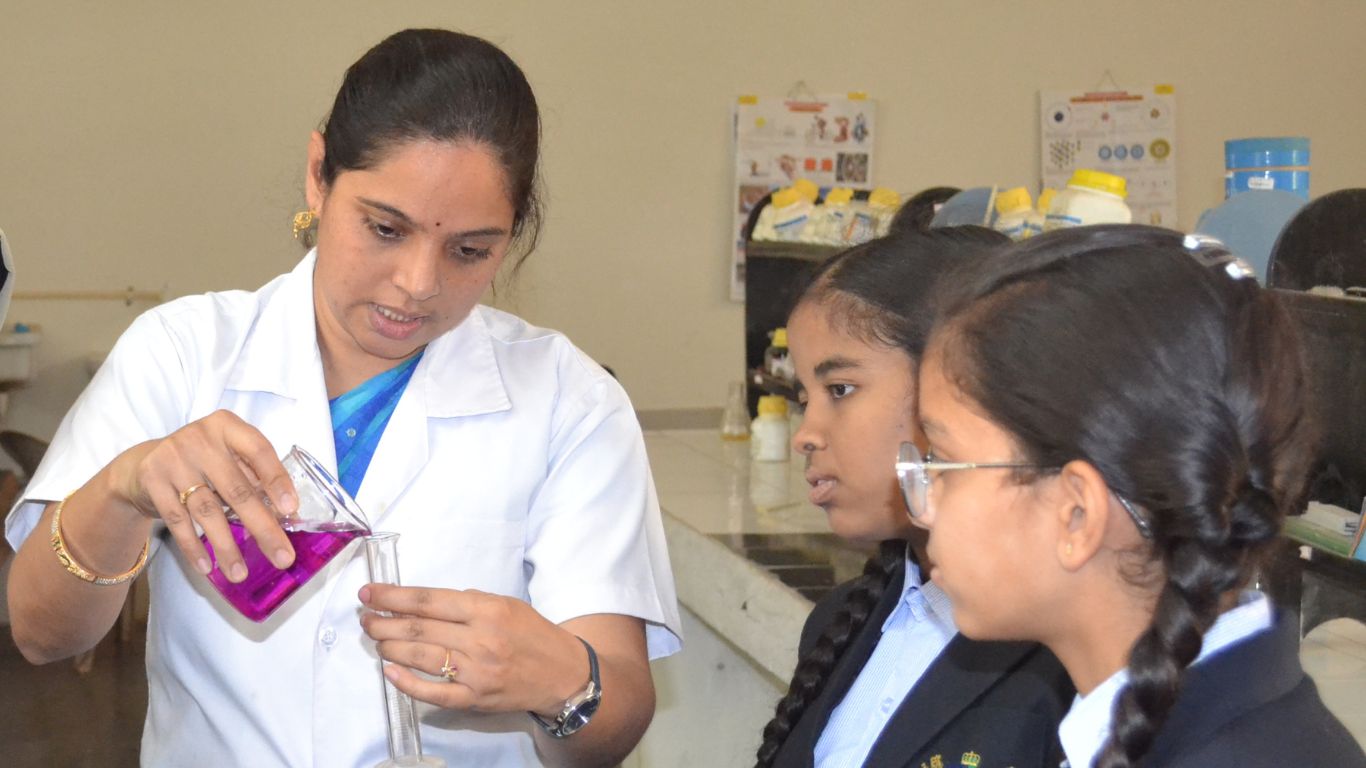
Think back to your own school days. Which lessons do you still remember? For most of us it is not the page we copied from the blackboard. It is the day we mixed two liquids and watched them change colour, the plant we grew in a paper cup, or the model we built for a science fair that almost fell apart the night before.
There is a simple reason for this. When children use their hands, their eyes and their curiosity together, a lesson stops being a list of facts and becomes an experience. Experiences stay with us. Facts that were only memorised for a test usually do not.
Doing beats memorising
Memorising has its place. Times tables, spellings and formulas need practice. But memorising alone gives a child an answer without the understanding behind it. Ask the question in a slightly different way and the answer often disappears.
Learning by doing works the other way round. A child first meets the idea in the real world, wonders about it, tries something, gets it wrong, tries again and finally sees why it works. By the time the textbook explains it, the child already understands it. The words on the page simply give a name to something they have already discovered.
Researchers and teachers describe this as a cycle: do something, reflect on what happened, connect it to an idea, then try again with that idea in mind. Each turn of the cycle makes the understanding a little deeper.
Tell me and I forget. Show me and I remember. Let me do it and I understand.
What it builds besides knowledge
Hands-on learning quietly teaches skills that no exam paper can measure:
- Patience, because real things rarely work the first time.
- Problem solving, because when something goes wrong you have to find out why.
- Teamwork, because most projects need more than one pair of hands.
- Confidence, because a child who has built something knows they can build again.
- Responsibility, because a plant only grows if someone remembers to water it.
How it looks at Samartha
Alongside the CBSE curriculum, our students spend time in the school garden, the science labs, the computer lab, robotics sessions and the kitchen.
In the garden they take part in the whole process, from planting seeds to weeding and harvesting crops. In robotics sessions they build, program and test robots in teams, and when a design does not work they work out why and improve it. In the science labs they carry out experiments, observe carefully and record what happens. In culinary sessions they prepare simple, healthy dishes and learn kitchen safety and hygiene.
None of this replaces classroom teaching. It gives classroom teaching something to hold on to.
What parents can do at home
You do not need a laboratory to help your child learn by doing. Let them measure the rice and dal while you cook. Ask them to work out the change at the shop. Grow a tulsi or a chilli plant on the windowsill and let them be in charge of it. When they ask “why?”, try asking “what do you think?” before giving the answer.
Small moments like these teach a child that learning is not something that only happens at a desk. It happens everywhere, and it is fun.